Recipe Planning
Adopting a pescatarian dietary pattern—combining a plant-forward foundation of vegetables, legumes, whole grains, and healthy fats with regular servings of wild and sustainably farmed seafood—is widely considered by cardiologists and longevity researchers to be one of the healthiest ways of eating on earth. It provides the cardioprotective benefits of long-chain omega-3 fatty acids (EPA and DHA), high-biological-value protein, and vital micronutrients like vitamin B12, selenium, and iodine, while avoiding the saturated fats associated with processed meats.
Yet, many aspiring pescatarians stumble over practical kitchen hurdles: seafood is expensive, fresh fish spoils within 48 hours, and cooking delicate fillets without drying them out or stinking up the house feels intimidating. The secret to sustainable pescatarian eating is an Intentional 3-2-2 Cadence: three seafood dinners per week, two hearty legume-based dinners, and two quick egg- or grain-centered reset evenings. This keeps your grocery budget modest while providing optimal nutritional diversity.
The pescatarian buying & kitchen rules
Master these four culinary rules to cook fish like a professional chef without stress or waste:
- Embrace Individually Flash-Frozen Fillets (IQF): "Fresh" fish sitting on crushed ice at the supermarket was often frozen on the fishing vessel, thawed, and displayed for days. Buying commercially flash-frozen, vacuum-sealed fillets (salmon, cod, haddock) is fresher, cheaper, and eliminates spoilage: thaw only what you will cook tonight in a bowl of cold water for 20 minutes.
- Pat Fish Bone-Dry Before Searing: Moisture is the enemy of a crisp sear. Press fillets firmly with paper towels until dry before seasoning with coarse sea salt and cracked pepper.
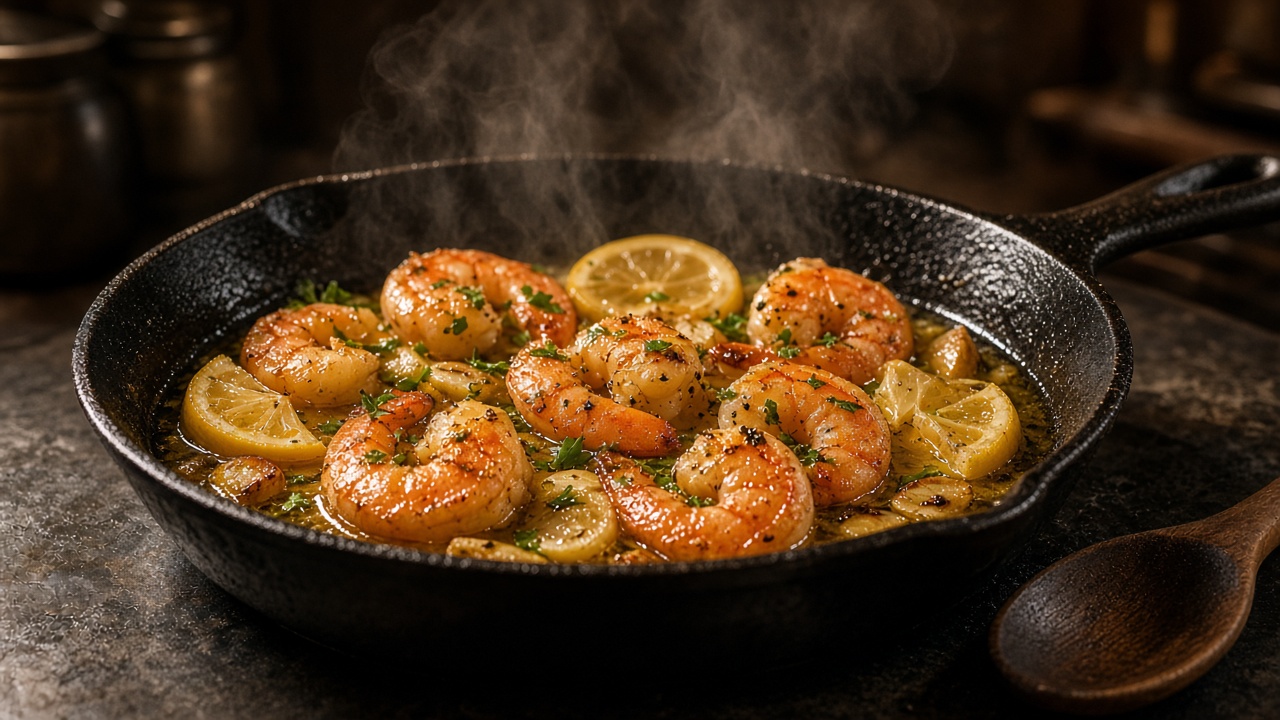
- High Heat, Do Not Touch: Place fish skin-side down in a smoking-hot skillet with olive oil. Do not move the fish for 3 to 4 minutes; as proteins crisp and caramelize, the fish will naturally release from the pan without sticking.
- Balance Fish with Earthy Legumes: Cooking seafood every single night is cost-prohibitive. Alternate fish nights with protein-packed brown lentils, chickpeas, and black beans.
7-day balanced pescatarian dinner plan
This plan alternates between delicate white fish, rich wild salmon, and plant-based whole foods. Scale portions with our servings scaler.
| Day | Breakfast | Lunch | Dinner | Seafood Prep Strategy & Culinary Technique |
|---|---|---|---|---|
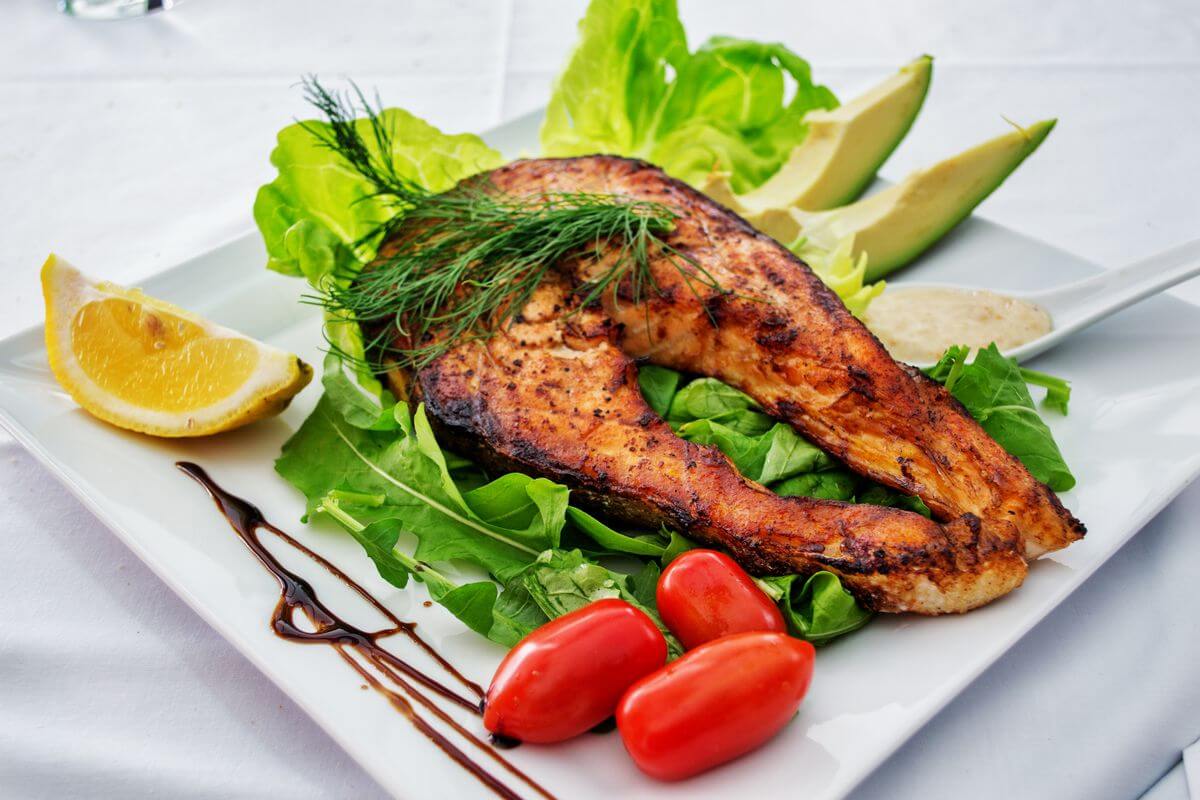
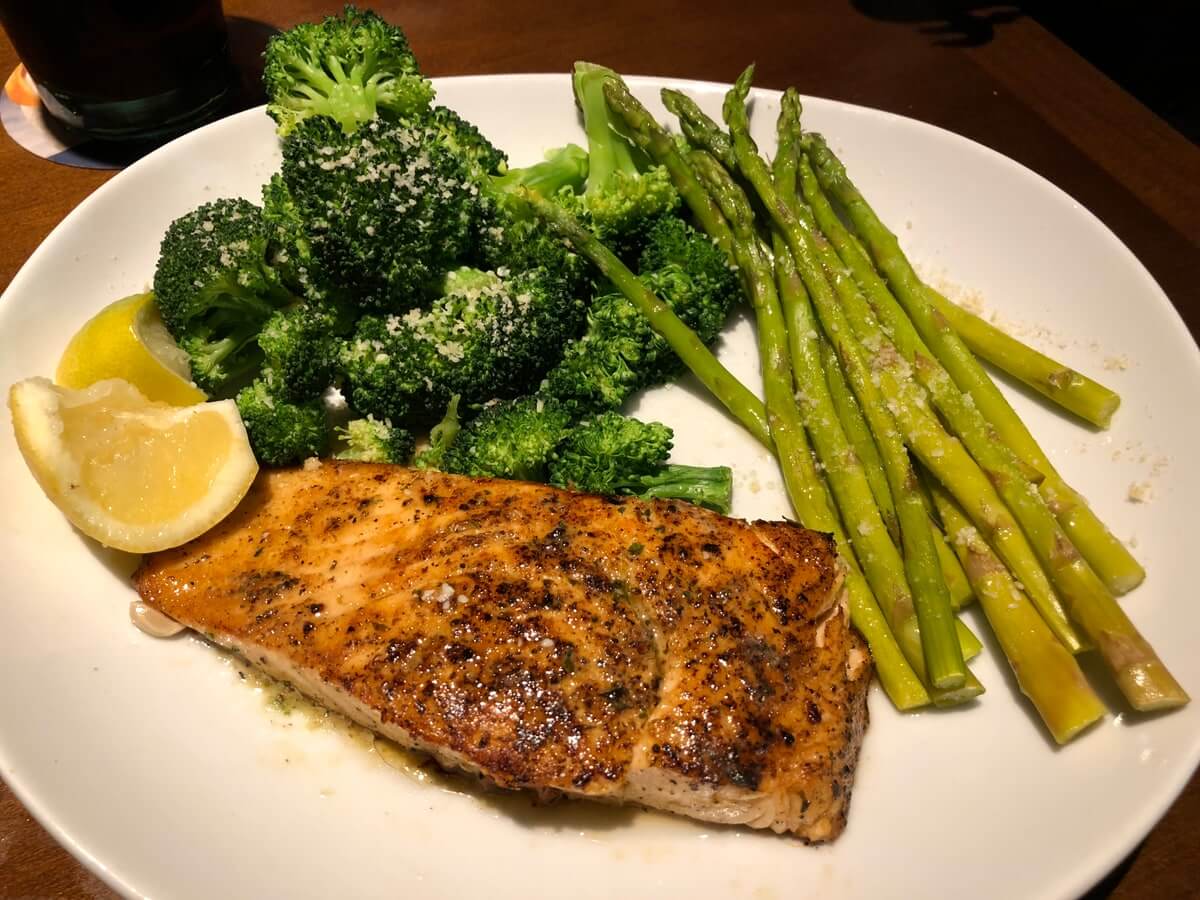
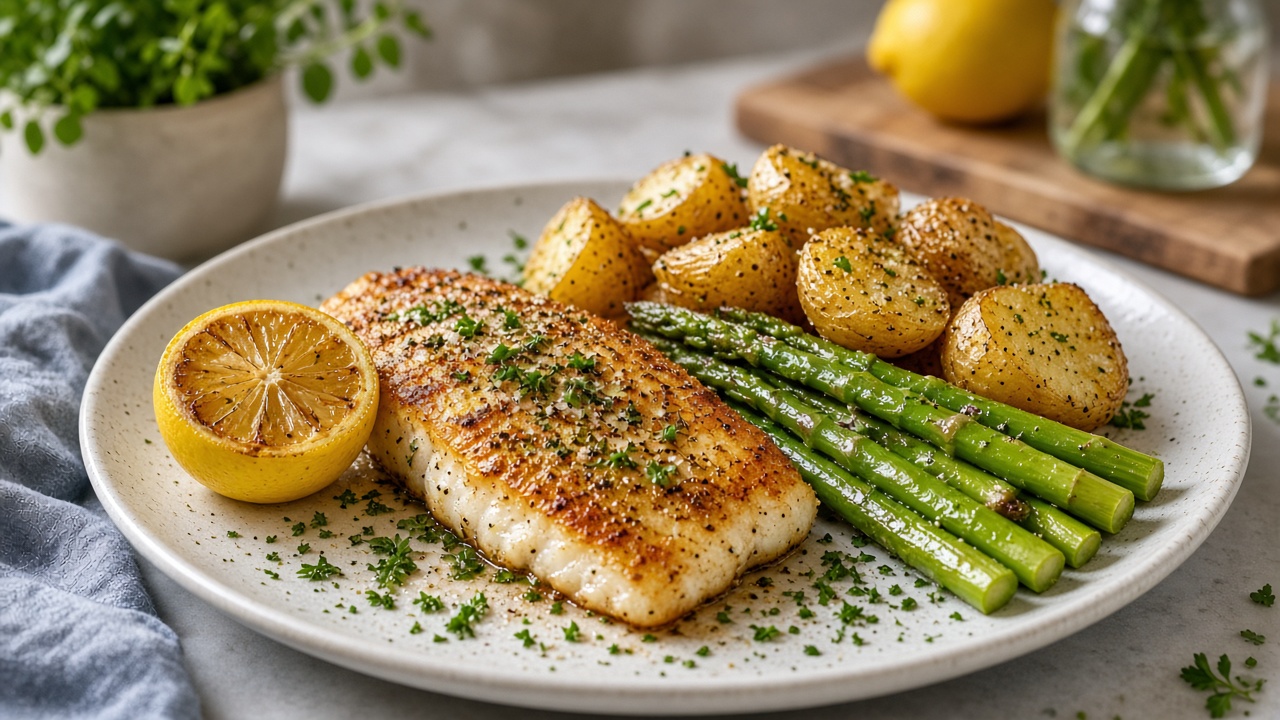
| Monday (Seafood) | Overnight oats with chia seeds, diced apples, and crushed walnuts | Mediterranean chickpea and cucumber salad with lemon tahini | Crispy skin salmon with roasted asparagus and sweet potatoes | Wild salmon roasted at 400°F (204°C); omega-3 rich dinner ready in 18 minutes on one sheet pan. |
| Tuesday (Plant) | 2 eggs scrambled with baby spinach, tomatoes, and sourdough toast | Leftover flaked salmon over mixed greens with olive oil vinaigrette | Fragrant chickpea and sweet potato curry over basmati rice | Hearty plant-protein dinner; sweet potatoes and chickpeas absorb rich coconut curry spices. |
| Wednesday (Seafood) | Greek yogurt bowl with fresh raspberries, pumpkin seeds, and honey | Leftover chickpea sweet potato curry (curry deepens in flavor overnight) | Tender oven-baked baked cod with cherry tomatoes and green beans | Delicate white fish nestled under blistered cherry tomatoes, capers, and garlic olive oil. |
| Thursday (Plant) | Avocado toast on artisan bread with poached eggs and chili flakes | Cold quinoa salad with leftover baked cod, lemon, and fresh parsley | Comforting bowl of hearty lentil soup with warm crusty bread | Simmer brown lentils with root mirepoix and tomato paste; freeze half for future busy weeks. |
| Friday (Seafood) | Smoothie made with baby spinach, frozen banana, hemp protein, and oat milk | Leftover hearty lentil soup served with a crisp romaine side salad | Flaky pan-seared herb-baked salmon with steamed broccoli and quinoa | Second oily fish night of the week; season fillets with fresh dill, cracked pepper, and lemon zest. |
| Saturday (Plant) | Buckwheat waffles topped with warm blueberry compote and pure maple syrup | Handheld mediterranean chickpea wraps with garlic tahini | Golden pan-seared vegetable stir-fry with tofu over brown rice | Friday speed dinner; extra-firm tofu seared in hot sesame oil with seasonal vegetables. |
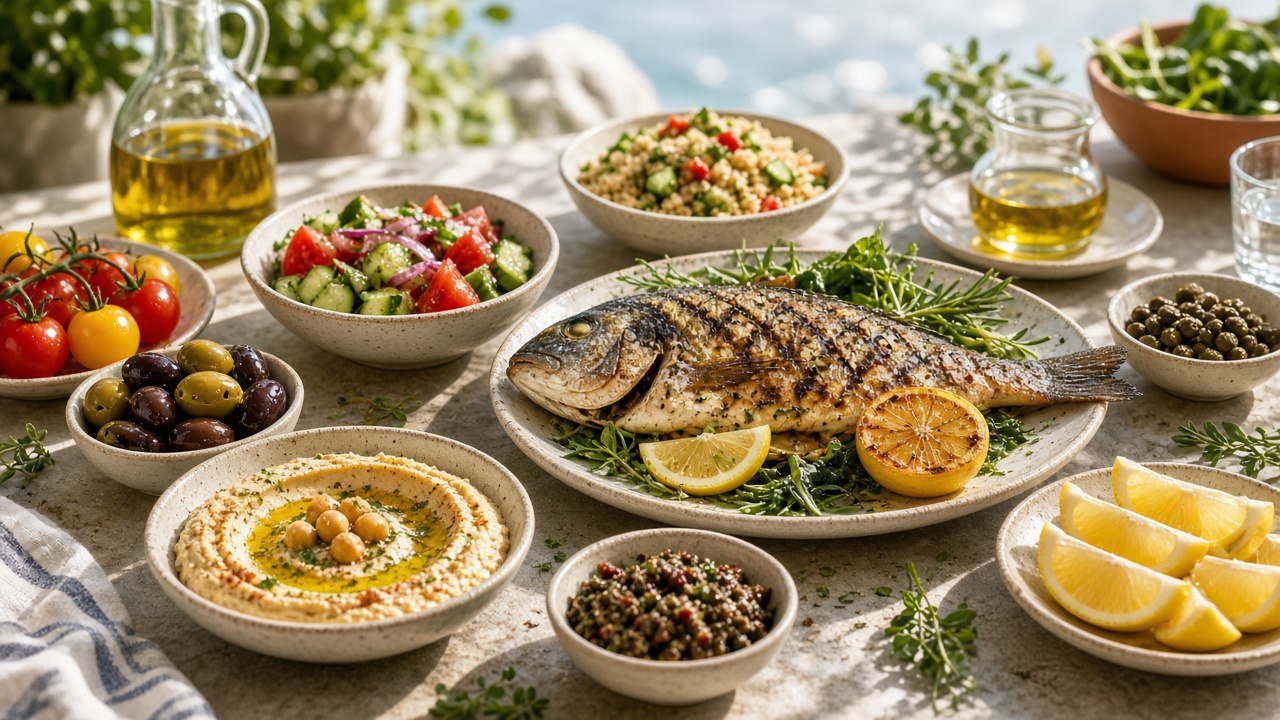
| Sunday (Reset) | Vegetable frittata baked with baby spinach, onions, and sharp cheddar | Leftover vegetable frittata served cold with a crisp side salad | Sunday Kitchen Reset: Mediterranean grain bowls with roasted vegetables and tahini | Clear out all remaining vegetables; roast on a single sheet pan and serve over cooked quinoa. |
The pescatarian supermarket shopping strategy
Save money and maintain culinary focus by organizing your cart around whole foods:
- Seafood: 4 salmon fillets (vacuum-sealed frozen), 4 cod or haddock fillets, and 4 cans wild albacore tuna.
- Plant Proteins & Legumes: 4 cans chickpeas, 1 bag dry brown lentils, 1 package extra-firm organic tofu, and 2 dozen pasture-raised eggs.
- Fresh Produce: 2 bunches asparagus, 1 lb fresh green beans, 1 lb baby spinach, 2 large sweet potatoes, 4 lemons, and 2 garlic heads.
- Pantry Grains & Oils: Quinoa, brown jasmine rice, whole-grain sourdough bread, and extra virgin olive oil.
Use our automated grocery list generator to create a consolidated shopping checklist, and review our aisle navigation guide.
What fails: 5 mistakes in pescatarian meal planning
- Buying fresh fish days in advance: Fresh, raw fish should be cooked within 24 to 36 hours of purchase. Buying fresh fish on Sunday with the intention of cooking it on Thursday guarantees a smelly kitchen and spoiled food. Buy flash-frozen fillets instead.
- Overcooking seafood into dry rubber: Fish cooks far faster than land poultry or beef. Cod overcooks in 12 minutes; salmon is done when internal temperature reaches 125°F to 130°F (52°C–54°C) for medium-rare to medium. Use a digital instant-read thermometer.
- Eating only farmed high-mercury predatory fish: Regularly consuming large apex predators (swordfish, king mackerel, shark, bigeye tuna) can accumulate heavy metal mercury. Prioritize smaller, wild cold-water species: wild Alaskan salmon, sardines, rainbow trout, and Pacific cod.
- Neglecting plant proteins and blowing the grocery budget: Attempting to eat expensive fish for lunch and dinner every single day is financially unsustainable. Make legumes and eggs your everyday lunch anchors, reserving fish for evening centerpieces.
- Failing to neutralize cooking odors: Cooking fish does not have to leave a lingering odor. Simmer a small pot of water with sliced lemons and cinnamon sticks on the stove while roasting fish, or bake fish wrapped in parchment paper packets (en papillote).
Frequently asked questions
How much seafood should I consume each week for optimal health?
The American Heart Association and dietary guidelines recommend consuming at least two to three 6-ounce servings of seafood per week, emphasizing fatty cold-water fish rich in long-chain omega-3 fatty acids (EPA/DHA) to support cardiovascular and cognitive function.
Is frozen seafood as nutritious as fresh seafood?
Commercial flash-freezing occurs within hours of harvest directly on modern fishing vessels at temperatures below -20°F (-29°C). This process instantly locks in fatty acids, protein integrity, and micronutrients. In many cases, frozen fish is actually fresher than "fresh" fish that spent days in transit.
How long do cooked fish leftovers keep safely in the refrigerator?
Cooked fish fillets should be stored in an airtight glass container and consumed within 2 days (48 hours). Enjoy leftover fish cold flaked over salads rather than reheating in an office microwave.
How does Recipe Planning help me build a pescatarian menu?
Our free meal plan generator allows you to select the pescatarian filter, balancing seafood and legume dinners automatically. Scale portions with our servings scaler and find creative recipes for leftover ingredients with the leftover finder.