Recipe Planning
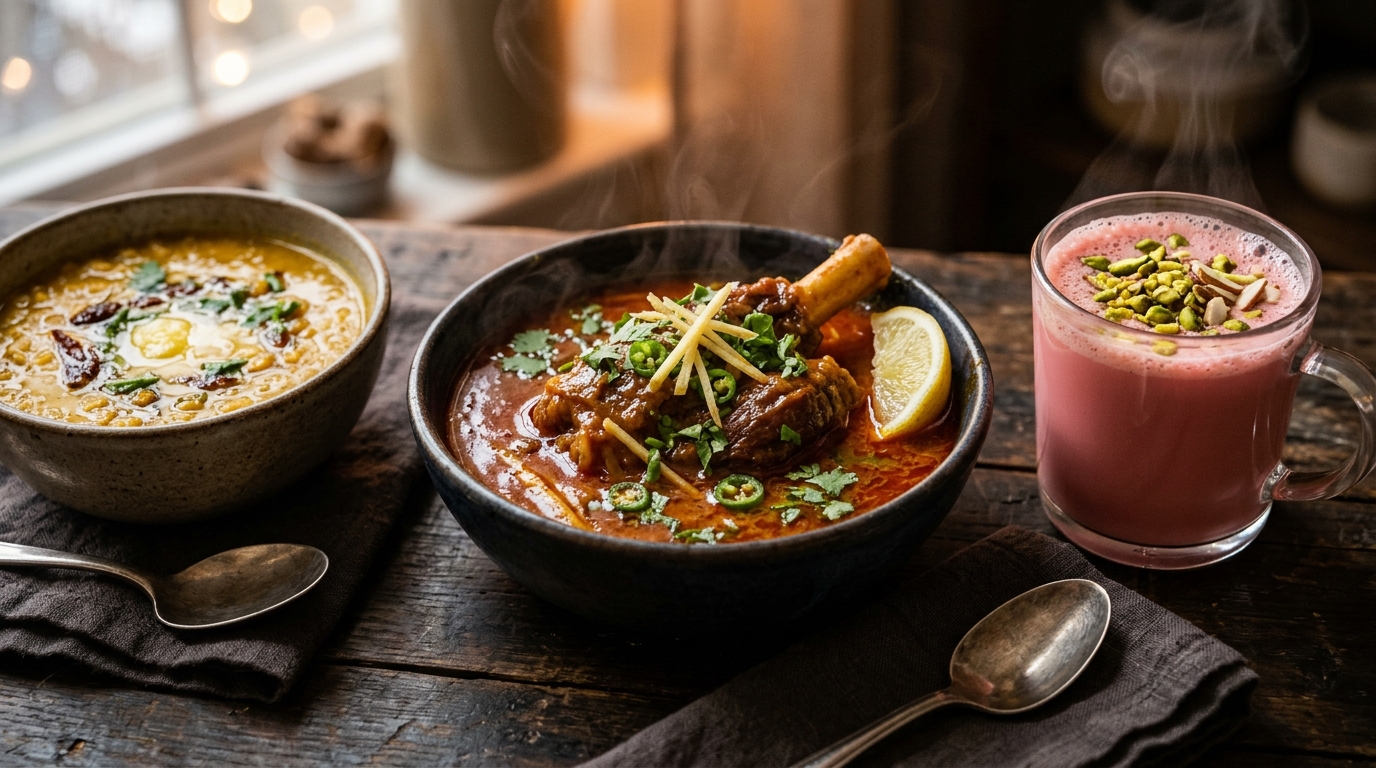
As winter temperatures plummet, our culinary instincts naturally shift. Our bodies crave warmth, deep comfort, and restorative nourishment. The light salads and quick stir-fries of summer give way to steaming pots of aromatic slow-cooked braises, velvety bowls of golden lentil soup, and richly spiced warm beverages that scent the entire home with cinnamon, cardamom, and clove.
The greatest secret of winter comfort food is that it is extraordinarily meal-prep friendly. Unlike delicate summer dishes that wilt in storage, hearty winter stews, collagen-rich braises, and leguminous soups actually improve after resting overnight in the refrigerator. As the dish cools, complex spices harmonize, fats emulsify, and aromatics permeate deeply into the meat and grains. This comprehensive winter cooking guide breaks down three iconic winter warmers—slow-cooker beef nihari, golden hearty lentil soup, and authentic Kashmiri pink tea—alongside a foolproof weekend batch-cooking strategy and practical food-safety guidance. For general batch-cooking frameworks, see our batch cooking guide and Sunday meal prep schedule.
1. Slow-cooker beef nihari: royal warmth on autopilot
Traditionally celebrated as the breakfast of royals in Old Delhi and Lahore, Nihari is a regal, velvety beef stew simmered overnight over slow-burning wood embers. Its name derives from the Arabic root nahar (day), as it was eaten at dawn to provide laborers and nobles with enduring stamina through bitter winter mornings.
While traditional stovetop methods require hours of vigilant monitoring to prevent scorching, a modern 6-quart programmable slow cooker is the ideal vessel for authentic nihari. It provides gentle, uniform heat that dissolves dense connective tissue into luscious gelatin without burning the flour-based gravy.
Selecting the right cut: shank vs. chuck
Never make nihari with lean cuts like sirloin or round; they will turn dry, fibrous, and stringy. The definitive cut is beef shank (bong), ideally bone-in with rich center marrow. Shank is packed with intramuscular collagen and tendon tissue. Over an 8- to 10-hour slow simmer, this collagen hydrolyzes into smooth, mouth-coating gelatin that gives nihari its signature glossy texture.
The step-by-step slow-cooker method
- Golden onion base: Heat 1/2 cup of pure ghee or unrefined mustard oil in a heavy Dutch oven over medium heat. Fry 2 finely sliced yellow onions until uniformly deep golden brown (about 12 to 14 minutes). Stir in 3 tablespoons of freshly pounded ginger-garlic paste and cook for 90 seconds until fragrant.
- Spice blooming: Add 2 tablespoons of freshly ground nihari spice blend (a fragrant blend of fennel seeds, cumin, black cardamom, green cardamom, cloves, cinnamon, mace, nutmeg, and Kashmiri chili powder). Sauté the spices in hot ghee for 45 seconds to release fat-soluble aromatic oils.
- Sear and transfer: Add 2 to 3 pounds of bone-in beef shank chunks. Sear on high heat for 5 minutes until the exterior is browned. Deglaze the pan with 1 cup of warm water, then transfer all contents into your 6-quart slow cooker.
- The thickening slurry (Atta): Whisk 3 tablespoons of whole-wheat flour (atta) or gram flour into 1 cup of lukewarm water until completely smooth. Pour the slurry into the slow cooker along with 5 additional cups of water. Stir thoroughly to incorporate.
- The slow simmer: Cover and cook on Low for 8 to 10 hours (or High for 5 to 6 hours) until the meat is spoon-tender and yielding.
- Finishing tarka and skim: Skim excess spiced red oil (tari) from the surface and reserve in a small bowl. Serve the stew steaming hot, spooning a ribbon of red oil over each bowl. For a classic stovetop variant, see our beef nihari recipe and our comforting aloo gosht.
Authentic nihari is incomplete without its fresh garnish table. Set out small bowls of razor-thin julienned fresh ginger, chopped fresh cilantro sprigs, finely sliced green bird’s-eye chilies, and juicy lemon wedges. The sharp heat of fresh ginger and the bright acid of lemon juice cut through the rich, buttery gelatin of the stew perfectly.
2. Hearty golden lentil soup (Dal Shorba)
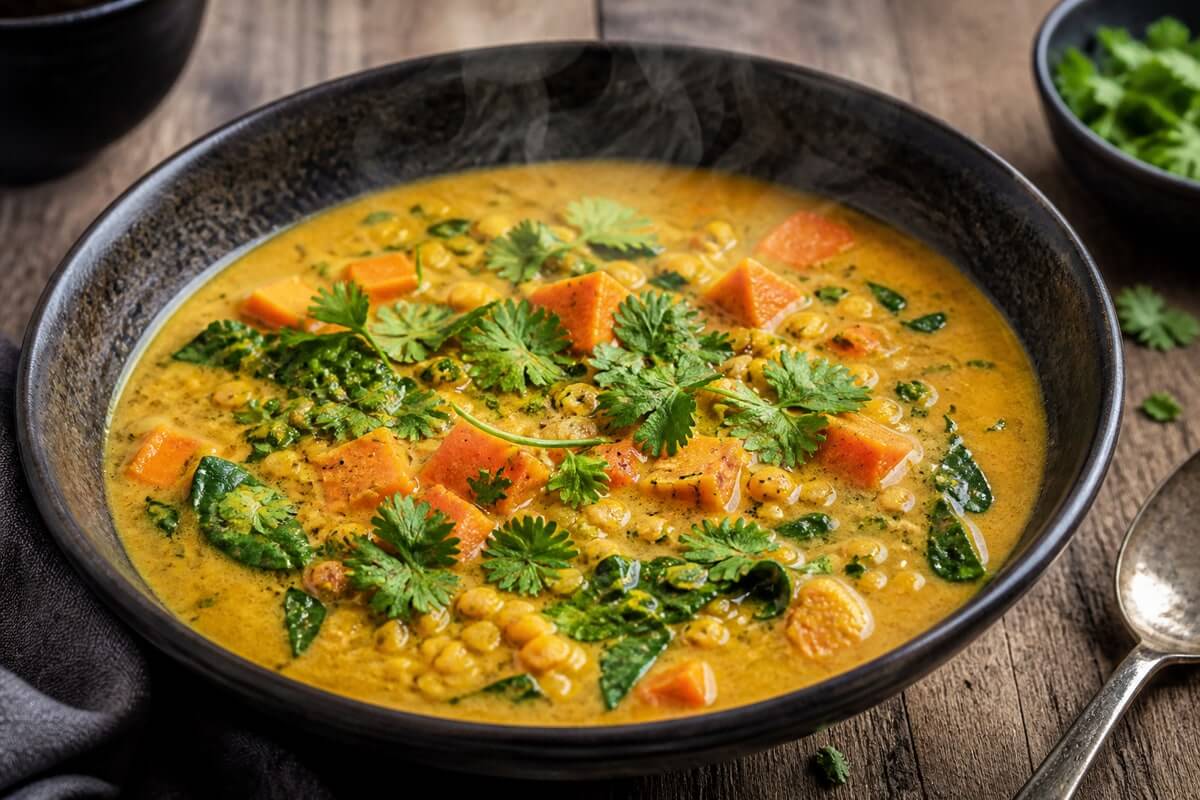
When you need dinner on the table without an 8-hour braise, red lentil soup is the ultimate winter workhorse. Red split lentils (masoor dal) cook in under 25 minutes, breaking down naturally into a creamy, comforting chowder without needing heavy cream, cornstarch, or butter.
Nutritional highlights & kitchen prep
Lentils are nutritional giants—packed with plant-based protein, prebiotic soluble fiber, iron, folate, and potassium. In freezing weather, this golden soup warms the core while supporting steady digestion and cardiovascular health. Pair it with our hearty lentil soup instructions for quick weeknight execution.
Building depth of flavor
- The aromatic mirepoix: Sauté finely diced yellow onions, carrots, and celery ribs in extra virgin olive oil until tender and sweet. Carrots add natural sweetness and vibrant orange hues.
- Warming spices: Toast 1 teaspoon of ground cumin, 1/2 teaspoon of ground turmeric, 1/2 teaspoon of smoked paprika, and a pinch of crushed red pepper flakes directly into the softened vegetables.
- Broth selection: Pour in 6 cups of rich halal bone broth or vegetable stock. Bring to a boil, stir in 1.5 cups of well-rinsed red lentils, reduce heat to low, and simmer uncovered for 22 to 25 minutes until the lentils are completely tender and dissolved.
- Texture choice: For a rustic texture, whisk vigorously with a wire whisk to break apart the soft lentils. For a restaurant-style velvety bisque, blend half the soup with an immersion blender.
- Finishing touch: Finish with 2 tablespoons of freshly squeezed lemon juice and a drizzle of peppery extra virgin olive oil.
3. Authentic Kashmiri pink chai (Noon Chai)
No winter beverage rivals the elegance and comforting warmth of authentic Kashmiri chai (also known as Gulabi chai or Noon chai). Renowned for its distinctive pastel pink color and delicate savory-sweet profile, this ancient Himalayan tea is brewed from specialized green tea leaves and garnished with crushed nuts.
The science of the pink hue: chemistry in the kitchen
Many home cooks mistakenly assume that pink chai relies on artificial food coloring or beet juice. Authentic Kashmiri chai is a pure chemical reaction between polyphenols and sodium bicarbonate:
- The tannin extraction: Simmer 2 tablespoons of Kashmiri loose green tea leaves with 2 cups of cold water, 3 crushed green cardamom pods, and 1 star anise over medium heat for 5 minutes until deep copper.
- The alkaline shift (Baking soda): Add exactly 1/4 teaspoon of baking soda (sodium bicarbonate). The alkaline baking soda interacts with the natural tea tannins and chlorophyll, transforming the liquid into a dark, dramatic burgundy-red.
- Shock aeration (Phentna): Pour 1 cup of ice-cold water into the pot. Using a ladle, lift the liquid high and vigorously pour it back into the pot repeatedly for 4 to 5 minutes. This intensive oxygenation deepens the color pigment.
- The dairy reveal: Pour in 2 cups of cold whole milk. The milk proteins bind with the oxidized red tea liquor, immediately shifting the color into a stunning, romantic rose pink.
- Seasoning: Traditionally, Kashmiri noon chai is seasoned with a pinch of sea salt. If your household prefers a dessert-style chai, stir in a teaspoon of raw honey or brown sugar. Garnish generously with crushed green pistachios and slivered almonds.
The weekend batch-cooking strategy for winter
Winter meal planning succeeds when you prepare two foundational pots on Saturday or Sunday, liberating your weekday evenings from meal prep fatigue. For comprehensive batch systems, refer to our batch cooking guide and Sunday meal prep schedule.
| Day | Dinner Menu | Kitchen Prep Time | Leftover & Prep Strategy |
|---|---|---|---|
| Monday | Steaming bowl of slow-cooker beef nihari with warm garlic naan and lemon wedges | 10 minutes (reheat & garnish) | Nihari flavor is even deeper after 24 hours of refrigeration. |
| Tuesday | Golden hearty lentil soup served with crusty sourdough and a crisp green side salad | 10 minutes (reheat & slice bread) | Whisk a splash of hot broth into the soup as lentils thicken in storage. |
| Wednesday | Leftover nihari pulled-beef flatbread wraps with pickled red onions and mint yogurt | 15 minutes (assemble wraps) | Shred remaining beef shank and spoon a light glaze of gravy into warm flatbreads. |
| Thursday | Enriched golden lentil soup bowl with wilted baby spinach and shredded roast chicken | 12 minutes (simmer greens) | Stir fresh baby spinach directly into the reheating lentil soup until tender. |
| Friday | Quick weeknight chicken karahi followed by warm Kashmiri pink chai and roasted almonds | 30 minutes (fresh cook) | Celebrate the weekend arrival with freshly brewed rose-pink tea and warm treats. |
What fails: 5 common winter meal prep mistakes
- Vigorous boiling of collagen cuts: Rolling boils agitate meat violently, causing delicate muscle strands to seize up and dry out while clouding the broth. Always maintain a gentle, lazy bubble when braising shanks or stews.
- Salting long-simmered stews too early: In slow-cooker recipes, water slowly evaporates over 8 hours. If you season to full saltiness at hour one, the finished dish will taste overwhelmingly salty by hour eight. Add only half the salt initially, and adjust seasoning at the very end.
- Freezing potato-loaded stews: Potatoes contain high moisture and loose starch cells. When frozen, water crystals rupture the starch cell walls, resulting in grainy, mealy, sponge-like potato chunks upon thawing. Freeze your stews without potatoes, and add freshly boiled potatoes when reheating.
- Boiling milk tea on high heat without watching: Whole milk scorches instantly on hot pan bottoms. When simmering Kashmiri chai, use low heat and stir regularly to prevent scalded milk flavors.
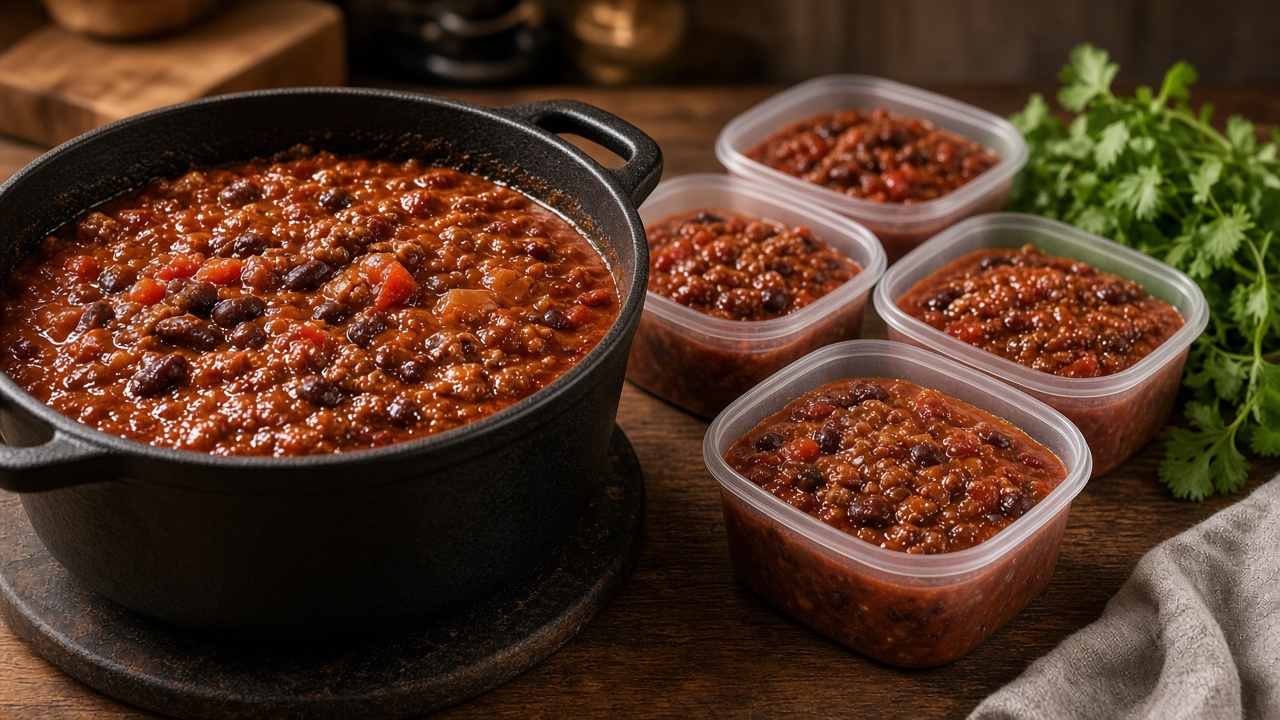
- Storing massive deep pots in the fridge: Storing a deep, 8-quart stockpot full of hot stew directly in the refrigerator insulates heat in the center, keeping food in the bacterial danger zone (40°F to 140°F) for up to 12 hours. Always divide hot stews into shallow glass or stainless steel containers before chilling.
Frequently asked questions
Can I make authentic Kashmiri pink chai without baking soda?
No. The iconic pink color in traditional noon chai is not caused by the tea leaves alone, but by an alkaline chemical reaction between the tea polyphenols and baking soda. Without baking soda and cold aeration, the brew remains muddy olive-brown when milk is introduced. A tiny pinch (1/4 teaspoon) is sufficient and will not alter the taste.
What is the best way to reheat frozen nihari and lentil soups?
Never microwave gelatin-rich stews or thick lentil soups directly from frozen. Thaw the container overnight in the refrigerator, then transfer the contents into a heavy saucepan over medium-low heat on the stovetop. Add 2 to 3 tablespoons of water or broth to loosen the gravy, cover with a lid, and bring to a gentle rolling simmer for 3 minutes to restore fat emulsion and vibrant aromatics.
How long do slow-cooker stews and lentil soups last in the freezer?
When cooled rapidly and sealed in heavy-duty airtight freezer containers, cooked beef nihari maintains peak texture and flavor for 3 to 4 months, while golden lentil soup keeps beautifully for 4 to 6 months. Label every container with the dish name and freeze date.
How do I calculate ingredients when scaling winter stews for a crowd?
Scaling long-simmered braises for dinner parties is not a simple linear multiplication; aromatic spices and liquids can quickly become overpowering. Use our interactive servings scaler to automatically calculate balanced ingredient ratios. Then organize your weekend market shopping with the grocery list generator and design structured seasonal weekly menus with our meal plan generator.